Babel
Searching for a school for Georgia, I found myself interviewing a young administrator from Lebanon. In turn, she discovered I have a French family name and suddenly our conversation shifted. She addressed me in her Beirut-Parisian and I returned the favour in American-Québécois. It was as natural as a walk in the Bois du Boulogne.
Perhaps, however, it was as natural as a ferry across La Manche, aka the English Channel, because, as bilingual speakers, we drifted back into English and then back into French. It was seamless and either of us would be hard put to say what was said in either language.
This is not an unnatural phenomenon; I have heard this mélange of languages all my
life. To hear it in Abu Dhabi is no surprise either, given the number of Lebanese and Moroccans here. However, here, one may be just as likely to hear two speakers sway between the camel’s humps of Arabic and English. A few weeks ago I heard the deputy editor speaking on the phone with his wife in Arabic, switch to English and then back to Arabic. If he was sweating it was because it was hot outside not from the effort of speaking and thinking two languages.
On the radio, in the taxi on my way home one night last week, the Urdu announcer said something about a report on “Bloomberg Television.” Certainly there is an Urdu word for television, I thought. Or maybe, “Bloomberg Television” is the name of the news organization. Perhaps still “television” is one of those words taken wholesale into the language the way “le hot-dog”, “l’internet” and “le weekend” were adopted by the French.
I did not speak English until I entered kindergarten. My mother tongue is French, though she was an estranged parent for much of my life. The order of religious sisters who ran the school I attended in Aldenville, to which my parents had emigrated from Quebec, taught in English. One morning, it would have had to have been my first morning, in kindergarten, the sister called out names for roll call. You could tell what kind of enclave we lived in by the family names of the children in the row in front of me: Aubuchon, Auger, Bachand. “Beauchemin,” she said. “Norman Beauchemin.”
“Il n’est pas ici,” I said. Though now that I think about it, they would have known that. The chair was empty in front of me.
The sister called me to her desk. “You are?”
“Raymond. Norman’s my cousin. He’s not coming here. The family moved,” I said in Frenc.
“Hold out your hand,” she said.
I did. She slapped it with a ruler. “We speak English here,” she said.
Not half an hour into my formal education and I’d gotten in trouble. What a long trip this was going to be.
(Of course, there was payback. From kindergarten through Grade 8, if the sisters commiserated among themselves in French and I was in earshot, I translated for the class.)
At home, like many generations of immigrant families in countries all over the world, when my parents spoke to me in the Old World language, I answered in that of the New World. I understood perfectly what they said; they understood my response. There are
words from my childhood though that even 40-some-odd years later I would have to search for an English equivalent. Secouer is something one does to le nappe after le souper. I have never shaken off a tablecloth after dinner. After 17 years in Montreal,
there are words that now seem so natural I must mentally thumb through a dictionary: corner store? What is that? Oh, le dépanneur.
In 1990 I moved to Montreal, Quebec’s largest city, an island of co-existent French and English – along with Italian, Greek, Hindu, Punjab, Russian, Chinese, Spanish and Arabic. There, to say one is bilingual is not much of a feat. I knew a woman born of Portuguese parents who had a Greek nanny and lived in a Jewish neighbourhood. She went to a French-immersion school in the English school board. Conversant in five languages by the age of six. Not bad.
To hear two speakers drifting between French and English in Montreal is like finding snow drifts in March. This year, there are snow drifts in April. Too much snow can be dangerous, however. Montrealers found that out this year with the collapse of several
snow-burdened roofs. When one language dominates another, the threat of collapse is just as real.
Quebec francophones felt themselves threatened in the 1960s and with the election of the Parti Québécois and the passage of several laws and creation of certain institutions, they managed to protect their language. Today, French thrives – spoken with some degree of proficiency by just about everyone in the province.
Arabic in the United Arab Emirates, particularly in Abu Dhabi and Dubai, is a threatened language. This is understandable. Combined, these two emirates have about 4 million people. Eighty-five percent of them, very nearly ninety percent, are expats. Now, some of those expatriates will be from other Gulf countries or countries where Arabic is spoken, like Lebanon, but not enough to affect the trend away from speaking Arabic. But most the immigrant population here is from the subcontinent. Their first language is either Urdu or Hindu. Their second language is not Arabic.
The sad truth is that everyone here speaks English, and Arabic is threatened because it is the minority partner in this strange pas de deux despite the fact it is the language of the one holding the dance card. To buy fruit here, to have pants tailored, to talk to a taxi driver, one speaks English. To obtain a driver’s license, to attend a museum exhibition, to mail a letter, English.
English is equally dominant on signage. English is the primary teaching language of almost all the schools. English is the language of the newest newspaper here, one that seeks to attract readers who have made the UAE their home but who cannot read Arabic.
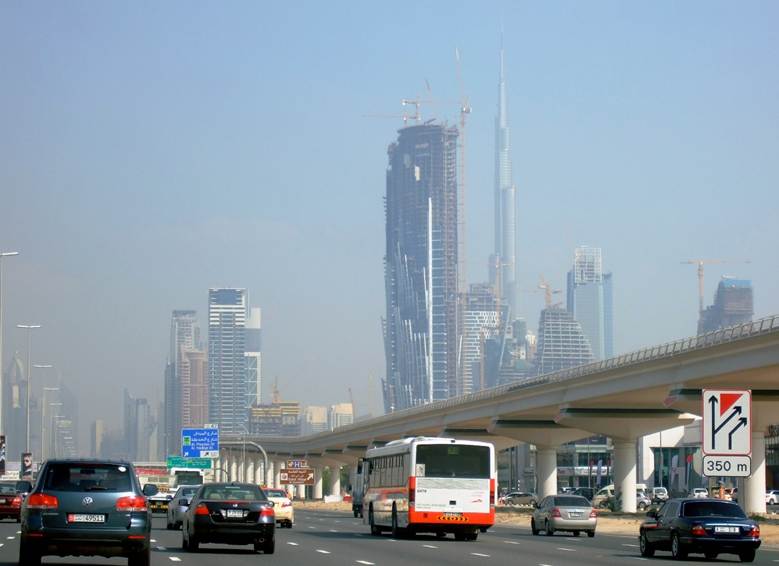
Abu Dhabi and Dubai, it seems, are victims of their own success. To create the cities they have wanted to create, cities of gold with towers of glass, they have had to import the means to do it. This has meant bringing in not just labour, but management. (The Emiratis own everything, they just don’t run it.) To create this gilded life, the Emiratis had to sacrifice their language and culture.
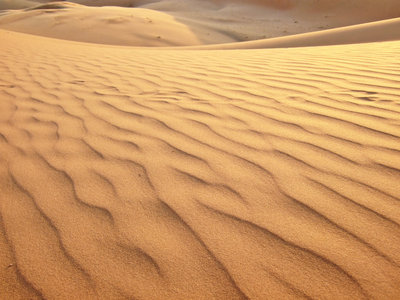
The Emirati sheikhs have taken note. Late last month, the sheikhs and the Federal National Council, the UAE parliament, sitting here in Abu Dhabi, announced Arabic proficiency tests for any student – Arabic or not – wishing to attend university. A good call. Arabic, whether spoken or written, is a hard language to master even without the infiltration of English, like so much blown sand in the cracks of a windowpane. If you’re going to work here, the law basically says, you must learn what we speak here and have spoken here for two thousand years.
The next day, the government announced the working language in all federal bureaux would be Arabic. The first question was: Why wasn’t it in the first place? The second question, one asked around the newsroom conference table, was: Will you still be able to buy a stamp in English?
Quebec, where French is the language of the majority of schoolchildren and working language in offices of fifty or more people, is not a good role model. French Quebecers are a majority in their province. Emiratis are not.
Also, many Francophone parents wish their children to learn in English to give them an edge when they grow up. The law prevents them from doing so, however. This is not bad legislation. Given the choice, many parents would enrol their kids in English schools. And then Quebec would be in the situation it found itself in forty years ago.
The Emirati citizens who can afford it send their children to private schools in Britain. They may be doing their children a favour, but it could, ultimately, hurt Emirati and Arabic culture.
Crane City
The world dropped off the southwest edge of town when I was growing up. From View Street, beyond Ravine, Lavoie and Mary streets there was open sky and a sparsely wooded scree. We enjoyed playing in a crescent-shaped, dry sandy cliff, the perfect place for the fertile imagination of young boys. We were not allowed to venture there, but unless we came home scratched up and broken, it was far enough away no one would know where we’d been. Of course, a boy doesn’t have to be playing near a cliff to come home scratched up and broken.
There were a couple of ways down, none of them a trail; mostly, it was a pants-tearing, dust-creating slide down the side as one attempted to create a zigzagging goat trail, grasping for small branches, the larger of the rocks or the occasional tuft of grass. It has been so long since I have seen it, I’m not sure how true I am being to my memory (or vice versa). What I remember quite clearly, however, perhaps because the amount of disgust and shame that is attached to it, is watching Steve F. pick up a cat and drop it over the side of the cliff after it had scratched him. It must not have gone far for within moments it had
clawed its way to the top. It was white with black patches, a large one around the left eye. Steve kicked it in the head and it was gone.
I am pretty sure this particular cliff no longer exists, although the town still does end rather abruptly where the sun sets. The construction in the 1980s of the I-391 bypass between Holyoke and Springfield changed the landscape of Aldenville forever.
View Street is at the end of Olea. Here was a bar with ceiling-to-floor windows out of which one could see the lights of Willimansett, Holyoke and the Holyoke Range beyond that. Below was the Connecticut River, a ribbon of darkness emigrating south toward Long Island Sound from Canada.
In my early teens we used to run a trail we called the Kangaroo Trail. We accessed it from behind the Aldenville Park, which sat between the immense Ste. Rose de Lima cemetery, where my youngest sister now lies, and the lands of the American Legion. One by one we would race down the steep, winding trail where, at the bottom, someone with a watch timed us. Billy Belle-Isle, blond, tall and reckless, was fastest. I was next.
The American Legion was where the Ste. Rose de Lima parish picnic was held yearly in September. As Boy Scouts we were in charge of parking, directing traffic off the road into the fields in rows and columns after the surfaced lot had filled. One year, I remember horsing around with other scouts after we’d finished for the day. We were pretending to pass a joint around. (Yes, even Boy Scouts.) I took my pretend marijuana cigarette, inhaled and held the smoke in. I woke up on the ground. I had apparently held my breath too long and fainted. I’d collapsed into a stroller a woman was pushing behind us. Let that be a lesson: Don’t smoke pretend pot.
Kangaroo Trail is gone now, another victim of the I-391 eraser. The Legion and – more importantly, its land – were sold to a condominium developer. The bar, which has changed names so often over the years it was impossible to keep up and now I’ve just plain forgotten, is still there, though. I saw it on Google Maps.
As we drove west along the Corniche Road in Abu Dhabi, I noticed a large backhoe moving sand. My new acquaintance Christian Debray, a Quebecer like me, informed me that the city was building a new public beach here. This is a good thing. Abu Dhabi is an island and though there are a number of beaches, and obviously a lot of waterfront, not much of it is open to the public. The soft, white-sand beaches are owned by private clubs and hotels. Most of the expats here are labourers from India, Pakistan and Afghanistan. You don’t see these people at private clubs and fancy-dancy hotels.
By the look of it, the beach will be quite long, close to a mile stretching from the western point of the Corniche pedestrian walkway to the point where the road turns north near the Emirates Palace Hotel and the marina. The walkway itself is long and goes from the Khalidiyah district east for at least ten kilometres toward the old port where the dhows are. The Corniche has undergone complete reconstruction in the past couple of years. It is now a favourite for walkers, joggers, cyclists and picnickers. The path is clean; there are fountains and lots of green spaces; miniature palm trees flourish. To get from the Corniche
back into the city without crossing the eight-land boulevard, there are underground pedestrian walkways, with mosaic tiled walls and steps, more fountains and waterfalls, and tunnels painted with scenes of Emirati life.
Christian and his wife, Amy, and I went to the Marina Mall at the northwestern tip of the island. This is the biggest of Abu Dhabi’s malls and caters to the more well-to-do Emiratis, tourists who might be staying at the nearby Emirates Palace Hotel, and middle-class expatriates who think they can afford to dream. On our tour of one wing of the building – we had about an hour before the start of our movie, so one wing was all we could cover – we stopped in front of a window and looked out.
I quoted a colleague from work who’d said that at the pace of construction in Abu Dhabi now, in five or ten years we would not recognize the place.
“Five years?” Christian mocked. “This is all new since I come here.” We were looking at a rotary with three points of entry and exit, one of which turned toward the future. Across the road were two buildings under construction, one a high-rise and one a long, four-story building that looked residential. Christian said the high-rise has doubled in height in only the past couple of months.
I live in a hotel apartment in the north-central part of the island. From my living-room window I see “Cannon Square” so named for the giant white statue of a … cannon. There are also statues of a traditional Emirati coffee pot and a reproduction of a fortress tower and other figurative statues though I don’t know what they represent. Beyond that, toward the Corniche, is Etihad Square. Etihad means “nation.” (Our Arabic sister newspaper is called Jiderat Etihad.)
Outside my bedroom window, however, come the sights, sounds and smells of construction of the Central Market. This was the main souk. It covered an area two city blocks long by one wide. Aldar Corp., the main Abu Dhabi construction company and a corporate parent of our newspaper (ultimately it is all owned by one family, of course) is the main contractor. Work starts with the rat-a-tat-tat of jackhammers about half-past six in the morning and continues until about midnight. It might continue after that, but my ears are asleep. The tall plywood signs keeping pedestrians from seeing the work-in-progress promise that the new Central Market will change our lives. There are photographs of well-off Western and Middle Eastern women, a Gulf family, lots of gold, riches. No one looks happy. I’m not sure how much they’re lives would be changed.
The artist’s rendition of the new souk pictures three spikes, beautiful towers with wave-like vertical ribs and lots of sea-blue windows. It had been my impression that souks were horizontal affairs, like open-air strip malls, where one meandered from one kiosk to the next, testing the ripeness of fruit and vegetables, haggling with a vendor over the cost of a rug, fending off the thin man hustling fake Rolexes. Between the rendition of the new construction and the advertisement photos, I have a feeling Aldar, responsible for much of the new look of this once-Baniya Bedouin tent city, intends to change the definition of souk in Abu Dhabi.
Fire
I had just put my book down for the night and shut off the light. With the drapes drawn and the lights out, the room sinks into a profound darkness. But it is alive with sound. Construction of the Central Market next door goes on, seemingly, through the night. I write “seemingly” because the ting-ting of hammers, the dull thud of pile-drivers and the rattle-and-hum of whatever is rattling and humming out there – a symphony of timpani – is still playing when I wake up.
The white noise rising up from Airport Road continues through the night, too: the traffic of Abu Dhabi never ends. It is metro-tinitis. There’s nothing unusual in hearing the screech of tires as drivers brake suddenly to avoid passing through a red light. And the shriek of the cabbies’ horns mark the seconds’ passing.
The screech this night, however, was more urgent. It shouted at the top of its lungs: “Please, Lord, don’t let me hit this car.” But the Lord did not answer the prayer. And the crash that followed the screech spoke of two tonnes of accordion metal and victims.
Dan and I raced to the window. Ten stories below us were two cars, one facing the wrong way, having likely been forced around on impact. “C’mon. We’ve got to get down there,” Dan said. Dan’s young, thirty-six, who once was a reporter for Agence France-Presse in Cyprus, from which the wire service dispatched him to Gaza and Iraq.
“We’d be in the way,” I said. Already a crowd had started.
He reached for his cellphone. “We’ve got to call 9-1-1.”
“Someone already has.”
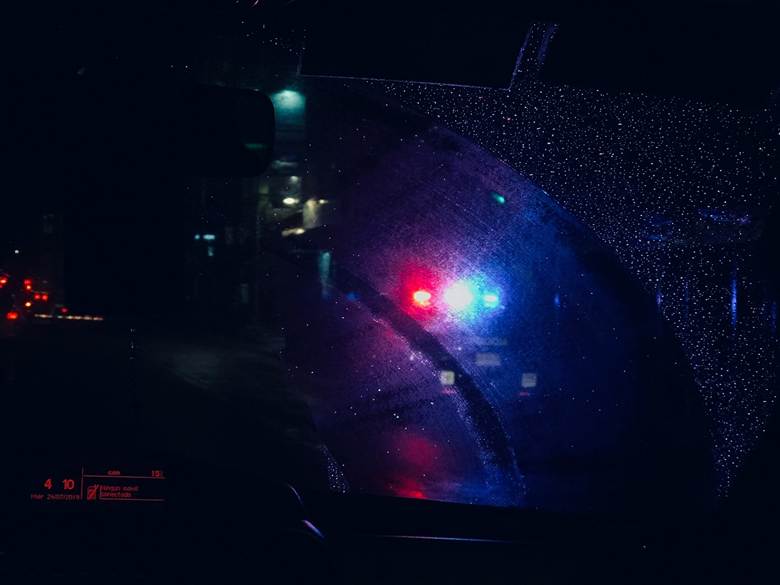
I could hear the whine of the police siren. The cruiser was coming down Airport Road. I went back to bed. Next morning, the street was clean.
Last Friday, I had come home late from the Katya internet café chatting with Denise on a video call. As I rounded the corner I saw a short, stubby-grey-haired man in a light blue shirt and blue pants locking up a door of the Iran Saderat Bank downstairs of our hotel apartment building. At five past midnight? I can’t figure out how everything stays open so late in this city.
I took the elevator up, talked with Dan for two minutes, went to the bathroom. I heard a loud buzzing. Through the bathroom door it sounded like a cellphone on steroided vibrator mode. Dan shouted: “Ray, c’mon. We gotta get downstairs. A car drove into the building.”
There was no stopping him this time. I looked out the window. The crowd was one of men, fifty of them at least and already. There in the corner of the bank was a yellow Matchbox with a black strip across its buckled hood. Next to it was a late model light-copper Toyota that had probably been parked and in the way of the yellow car’s building-bound trajectory. The yellow Matchbox, I realized, when I made it downstairs, too, was a Lamborghini. The driver was no longer in the car.
I met Dan on the way down. In blue T-shirt and faded khaki desert shorts, he was racing back into the apartment building. “The cops tried to take my camera.”
The men milled about, manoeuvring for a better view, craning their necks, leaning one way then the next, standing on tip-toe. They were Indian, Pakistani, Lebanese, not a Gulf Arab among them. Those with cameras in their cellphones shot photographs. It reminded me of all the photos I’ve seen over the years from bombing scenes in the Gaza Strip, the West Bank, India, Pakistan, Iraq, Afghanistan – where do these people come from so fast? what is the interest?
The man I’d seen ten minutes before, closing up the bank, was trying to move the men away from the scene – as were the police, who now numbered about half a dozen.
Dan was back. He lifted his camera to his eye and shot again. A policeman grabbed his arm. Dan backed away. He spoke loudly and clearly: “Jeridat Etihad (Etihad newspaper – which is the name of our sister newspaper)” and showed the badge we use to get into and out of the Emirates Media building. The policeman wasn’t buying any of it. He took him to a fellow officer, who examined the badge. Dan took another shot. The officer handed back the badge and let Dan do his work.
Other officers began pushing back the men and two more drew out a roll of plastic tape marking the area as a police scene.
“Want to do some reporting?” Dan asked.
“Not particularly,” I said. I looked around. No one dead, no one hurt; an accident that was more spectacle than spectacular.
“You got a pen? I got to take some details,” Dan said.
I shook my head, went back upstairs.
Jim Sears was the bald, pear-shaped photographer with wire-rimmed glasses and a ready laugh at the Transcript-Telegram in Holyoke, where I started. He looked like a cartoon character, a particular one named Ziggy. That’s what people called him – even though he’d been around a lot longer than the comic. He drove a dark shit-brown AMC Eagle.
One summer night in 1984 – I’d been on staff six months at that point, as the police reporter for Chicopee where I grew up – I had gone to sleep early. I woke to the sound of fire engines from the Aldenville station racing down Grattan Street. One was nothing. Two, hmmmm. I got up. I must not have been asleep long. My mother was still watching television, my father asleep with his head in her lap.
I got dressed quickly and drove down the hill into Willimansett. I found a payphone, dropped in my dime, and called Ziggy. I must have woken him up, too. We were a PM paper, after all. We started work, some of us, before six a.m.
“How big is it?” he asked.
“It’s big.” I described what I saw.
“I’ll meet you there.”
The newspaper ran the photograph the next afternoon. Begrudgingly, and only because someone had been charged with drinking and driving. Ziggy said not to call him at night anymore.
Back upstairs, Dan showed me the dozen or so shots he took. “I think I’ve got one publishable one here,” he said. I pointed out a second. He said he would take them to Etihad the next day, “as a goodwill gesture.”
I looked outside the window again. A tow truck was parked on the side of the road blocking one lane – there are no shoulders to speak of. I wondered how the driver would get the Lamborghini out. There were fewer onlookers now. Bored, fulfilled, satisfied, they had drifted away, scattering like glass shards.
One summer night (if my memory serves me well, this would be the summer of 1976 and I would have been thirteen), we heard the alarm go off in Station 13, not even a quarter mile down Grattan Street. We heard the fire engines race out. We waited. If it were a false alarm, we would hear the alarm stop and see the trucks come back in a relatively short time. The alarm continued. We heard the truck come up from Williamansett.
Someone called on the telephone. It was the Laundromat. We filed out of the house and scurried down the sidewalk. There we joined a growing crowd across the street from the Laundromat, a ground-floor business fronting Grattan and sandwiched between Ray’s Supermarket and a barber shop. The Royal Tavern was on the corner. The crowd was gathered in the parking lot of Jane Alden, the convenience store where I used to buy music magazines to read lyrics to popular songs and where I bought my first cigarettes.
Several of my friends were in the Jane Alden’s parking lot as well. Glenn and Jimmy lived down the street. Jeff wasn’t far away. I remember Mike, too. The Laundromat was on my walk to school. If Glenn had already left for school, I walked by it alone, my forest-green canvas book bag strung over my shoulder; I stopped in the Laundromat to meet briefly with some of the Protestant kids – who knows if they actually were, but they didn’t go to Ste. Jeanne d’Arc, so in my parents’ and my limited world view, that meant they were Protestant – with whom I’d become friendly through others, namely Mike. There, I would have a cigarette before school, or when I had quit smoking (does it count? to have smoked Newports irregularly for maybe nine months to say that I had “quit”?), just to hang out.
One morning, I had walked by, with a cigarette cupped in my hand and my hand inside the left hand pocket of my navy windbreaker. The kids – they were both boys and girls – teased me about not stopping, said something about my not smoking with them any longer, asked me what was in my pocket. I moved along. I passed Piotte’s pharmacy on the corner of McKinstry, where I used to – when I had been oh so much younger only two years before – play a guess-the-time game with the school crossing guard. I walked beyond Cumberland Farms, the other convenience store in town, toking on my cigarette as surreptitiously as I could, and past Spiro’s pizzeria. By the time I reached the boys’ school yard the cigarette was gone.
I found my gang of friends in a circle by the steps leading up to the door to the first floor where the younger kids were. We talked. Then Mike pointed to my windbreaker pocket. “You’re on fire!”
I looked down. There was smoke coming out of the pocket. I dropped my book bag and
started slapping at the jacket. I put the fire out. There was a black, scorched-edge hole the size of a US quarter in the pocket. I inverted the pocket. It looked like a bunny ear with a shotgun hole, all the way through. I opened the jacket to see if it had damaged my pants or belt, too. Lucky there. I took off my jacket and stuffed it in my book bag. No need in having the nuns question me.
In the Jane Alden parking lot, it was clear, it was not the Laundromat itself that was on fire but the apartments above it. We stayed to watch, though we were not really watching anymore. It was a chance for neighbours to get together and talk. For friends to slap each other on the back and for kids to horse around. Aldenville was a pretty small enclave of French-Canadians (except for those Protestants, of course), so I knew just about everybody there. There were some, however, that we didn’t.
My mother was talking with Dorothy, a neighbour from across Grattan Street. She and her husband used to come over for pizza late at night every once in a while. Pizza and drinks. In the parking lot, she nudged my mother with her elbow. (Mental math here. If I was thirteen, my mother was thirty-three; Dororthy was a bit younger.) Dorothy nudged my mother and raised her chin a bit to indicate a skinny young woman unknown to them walking nearby. I remember a thin white sleeveless sweater. My mother looked. They giggled to each other.
“What? What?” I asked.
“Riens,” my mother said. Nothing.
“It’s not nothing.”
“She’s got no bra,” Dorothy said.
I turned, but the woman had walked by.
Laundry List
Laundry isn’t the big deal now at almost 46 that it was when I was 16. My parents left for Quebec for a week that summer, but I begged off going because I was working – that was the excuse. The real reason, of course, was that I was going to party. And God, did we party. Just one night actually. I was working most of the other nights and one night I went to the movies. (Alone in a darkened home is a frightening place to be after seeing The Amityville Horror.) The party involved copious amounts of alcohol, a fair bit of weed – although I wasn’t smoking anymore by that point (I’d kind of flipped out at a Queen concert the year before) – and lots of rock’n’roll. The next-door neighbour, when she told my father about the party upon his return, said some of the guys were relieving themselves in the space behind the garage. I don’t doubt it. There was only one bathroom.
As for the laundry, I couldn’t figure out how to work the machine. I’d filled and emptied the dryer plenty of times, but the washer was my mother’s domain. All these powders and detergents and fabric softeners and which water temperature went with which clothes. It was a bit too much for a hangover. I asked the upstairs tenant, who sent her niece to the basement to help.
She said she’d show me if I paid her three bucks.
What?
Three bucks. “My aunt said three dollars.”
Was it worth saying no and not getting the laundry done?
The niece picked the worst time to come collecting: with my parents in the doorway
and their luggage in the kitchen.
Then the neighbour piped up to my father. I’d had better nights.
Weekly after Denise and I moved in together, I trekked to a Laundromat. I got a great deal of reading done near the heat of the dryers and accompanied by the dizzying whirly sound of the spin cycle. At home, I gladly did it. The washer and dryer were in the basement near my office. Pretty easy to keep track of what needs transferring and what needs folding. Although, paying attention to the change in wash cycles is sometimes difficult when you’re wrapped up writing dialogue. Sometimes you forget to add the bleach.
These days I wash clothes in a tiny front-loading machine, pouring just a half-cup at most of Ariel detergent into the slot (more than that and it foams out the front). The machine takes about three times the length of the full-size Whirlpool at home. And drying takes all day. The window was open to let in the 22C heat today, but it was windy and by the time I left the apartment at 1:30, only two shirts were dry. I’d started the laundry at 8 a.m.
Lunch was at the Club, a beach-side haven in the city’s northeast tip, near the Port and all the industrial buildings you find in a port, and the dhow pier. There’s a long waiting list to join the Club and it didn’t take long to see why. The beach sand is soft and light, the water more green than blue and warm (by Canadian and New England standards); the cost is low and the place caters to families. There’s a health club, three bars, three restaurants, a library, an indoor pool, squash, tennis and a cute climbing wall. Cute because it’s only one story tall, in keeping with that family friendliness I guess.
I hadn’t planned on joining a beach club or fitness club here. I hadn’t belonged to one since I was in my early 20s. I’m not much into racquet sports; I’m not much of a swimmer. What’s the point? In Abu Dhabi, the point is getting out of the heat. A quick look around the Club, I decided it was worth doing – the price is right, only about $1,500 a year for the family – and took photographs to send home, to persuade Denise, who has expressed a certain reluctance to anything that remotely smacks of colonial life. Of course, in Abu Dhabi, we’re not the colonials. We’re the expat workers. The rich – the Emirati citizen is worth an average $17 mil – don’t join the Club. They build five-, seven- and nine-bedroom villas and palaces with pools and tennis courts. The buildings are surrounded by one-story walls topped with barbed wire. Not good for climbing.
Lunch was outdoors in full sun and beach breeze. We were myself, Dan, who is the head of the revise desk and my present roommate, his newly arrived deputy Joanna, her husband, Blaine, who will be working on the newspaper’s website, their eight-month-old daughter, Evie, and Luciana, the multimedia director and a Club member. We couldn’t have had lunch there without her. Membership has its privileges. (We’ll be celebrating Luciana’s 30th on the beach on Friday. A hundred and fifty dirhams – about $45 – for all-you-can eat and drink.)
Denise called toward the end of lunch – I had an aubergine and roasted tomato salad with buffalo mozzarella, and a dark chocolate mousse and a couple of open-faced truffles for dessert. The salad was small but good. I’ve made lighter, fluffier mousse, but the truffles were rich in ganache. She’d had a bad day the day before and the call seemed to cheer her up. It’s difficult being alone. I can’t stand it. I’m not sure how she’s doing it, except that she is. I’ve only got to show up for work, stay healthy and do laundry. She’s got to write, work, keep up the house, take care of Georgia, guide Georgia in her homework, and keep the two of them entertained to prevent any slide from “alone” to “lonely.” On top of that there’s the bathroom renovation that still isn’t finished, the bills she has to pay, and tax forms she hates filling out.
Our Montreal friends have done a good job keeping Denise and Georgia on their minds, in their prayers and at their dinner tables. I am so grateful for that.
I cabbed it over to what by Abu Dhabi standards is a small mall, but which is about the size of Angrignon. There’s a LuLu’s “hypermarket” there, which is a combination Loblaw’s, Centre Hi-Fi, and BabyGap – and that’s just what I’ve seen. There’s another floor to it that I’ve missed. The produce section alone is bigger than some groceries.
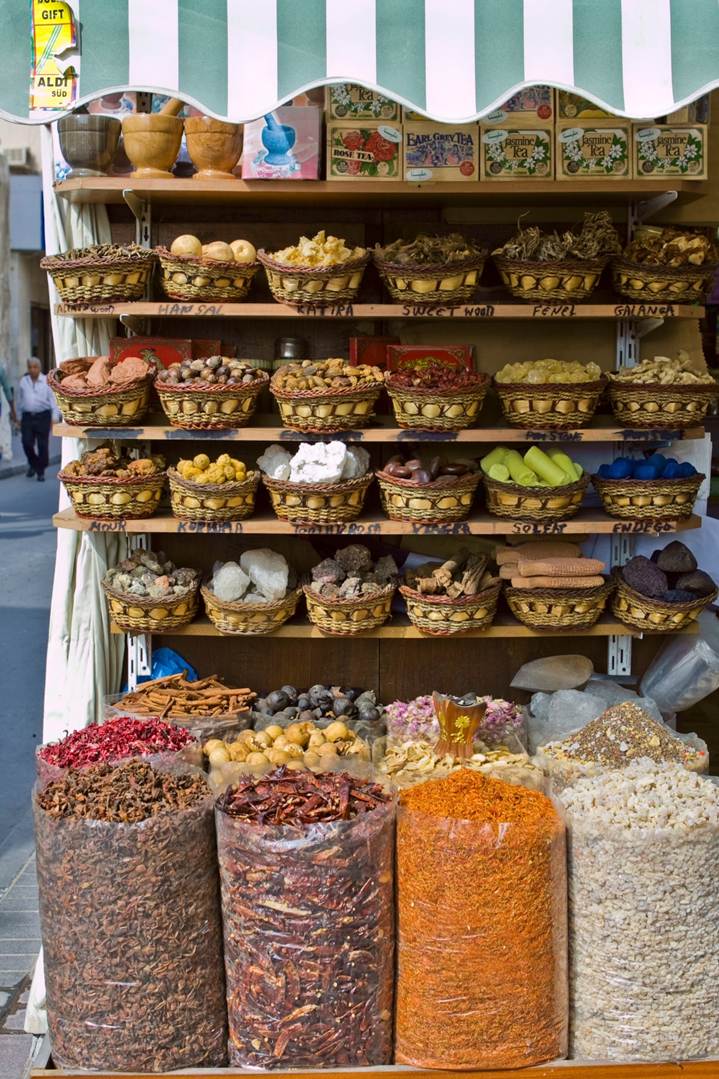
There are oranges from Spain, Morocco, Egypt, Australia. Tomatoes from Holland and hothouses all around. I prefer the Jordanian ones. The come with the sand still attached, they look rough but are juicy and the least expensive. I bought a Styrofoam box of about two dozen various-sized tomatoes for $2. The best cucumbers are the small Middle Eastern style ones that are grown in the U.A.E. There’s an aisle that’s just bags of rice. Another aisle that is just milk.
At home in Montreal I did the shopping – because I did the cooking. If you’re not the one doing the cooking it’s hard to do the shopping. Even if you have the cook’s list, it’s hard to get in his head and know how many tomatoes he really needs.
When I got back to the apartment, I packed the fridge with my new goodies and got to preparing a dish from the Middle Eastern cookbook my sister gave me for Christmas, a wild mushroom, tomato and bulgur mix. I cleaned and stemmed the shitakes, diced a softball-sized onion and a red bell pepper. In a pot, I melted a couple tablespoons of butter and sautéed the pepper and half the onion. When they got to the right softness, I add the bulgur and cooked that a couple of minutes before adding water, salt and pepper. In a frying pan, I sautéed the remaining onion to just about caramelized. I added the mushrooms and cooked these up until the mushrooms were soft and the kitchen had a sweet smell of woodsy decay. By then the cracked wheat had absorbed all the water. I added a chopped scallion and three tomatoes and some dried basil, the mushroom-and-onion sauté, took it off the heat and fluffed it. I had two bowlfuls with a fresh pita.
All the while, Neil Young was playing on the CD player in the laptop computer and I was bordering on something approaching maudlin self-absorption. Music can do that in a way almost nothing else can. Reading, even when it’s emotionally engaging, still involves too much intellect. Movies are too visual to invite entry to any emotion other than the ones on the guest list. Music is history. Music is biology. Music is every girlfriend you’ve ever had – which means the ones who left you and, worse, the ones you left. So Neil Young’s “Comes a Time” recalls my junior year in high school. I used “Cinnamon Girl” when I put together a DVD video for Denise’s 60th birthday party. When “Southern Man” plays, I hear Lynyrd Skynyrd’s comeback line from “Sweet Home Alabama”: “And hope Neil Young will remember; Southern Man don’t need him around anyhow.” Then there’s the line from “Helpless” about the town in north Ontario: “All my changes were there.” Who I ask you doesn’t long for the teenage boy he once was?
Then, there was “Harvest Moon.” Need I say more? Denise, where the hell are you?
I folded my underwear, the socks, a T-shirt, and a long-sleeved pullover that has lost its
shape and I’m not sure if I’ll be able to wear it anymore.
I washed the dishes, curled up in an overstuffed chair and lost myself in Bill Buford’s Heat,
another world, another kitchen, another adventure.
Mall Life
When I was between 13 and 15 years old, my friends and I on a Friday or Saturday night could regularly be found haunting the Fairfield Mall. We would smoke marijuana and drink pony bottles of Miller High Life in the darkened woods in back of the mall near the Westover Air Force Base, climb the low branches of trees, sing at the top of our lungs – I can remember particularly bad renditions of Barry Manilow’s “Mandy” – and play jokes on each other. One involved placing a pretend fishbowl – just our hands spread apart the distance of a large bowl – on top of a friend’s head. As the bowl descended over his head, we would stop talking although we would still be moving our lips as if speaking. If we were sufficiently high and the surrounding area sufficiently quiet, the target of the joke would get sufficiently freaked out. What games, what fun.
Then, if it was still early enough, we drifted over to the mall for slices of cheese pizza with hot red pepper flakes and grated Parmesan, to the T-shirt kiosk for a new Queen, Eagles, or Kansas silk screen, the head shop to check out the lava lamps, and to the games arcade to tilt pinball machines and try our hand at (drinking and) driving on what would now seem to be rather antiquated video games. Sometimes, we would bump into some of the girls from school. Maybe one or two of us would split off with one or two of them. But generally it was just teasing and giggling and then off we all went on our merry ways.
When the mall closed, our gang would head off in different directions of home; those of us living in Aldenville running across Memorial Drive to the entrance of the Massachusetts Turnpike, and walking along that toward home. There was Dan, Jimmy, Benji, Glenn, sometimes Jeff and Denis. We weren’t so much trouble as we were at loose ends. We called ourselves the Choirboys after the Joseph Wambaugh novel.
This was in the mid- and late 1970s. We were the precursors, I guess, of the mall rat culture of the 1980s, which was driven by consumerism rather than boredom, and the swarming gangs that invaded North American malls in the 1990s, which led to the decline in popularity of single-edifice malls and the resurgence of strip malls, with less chance of loitering and trouble.
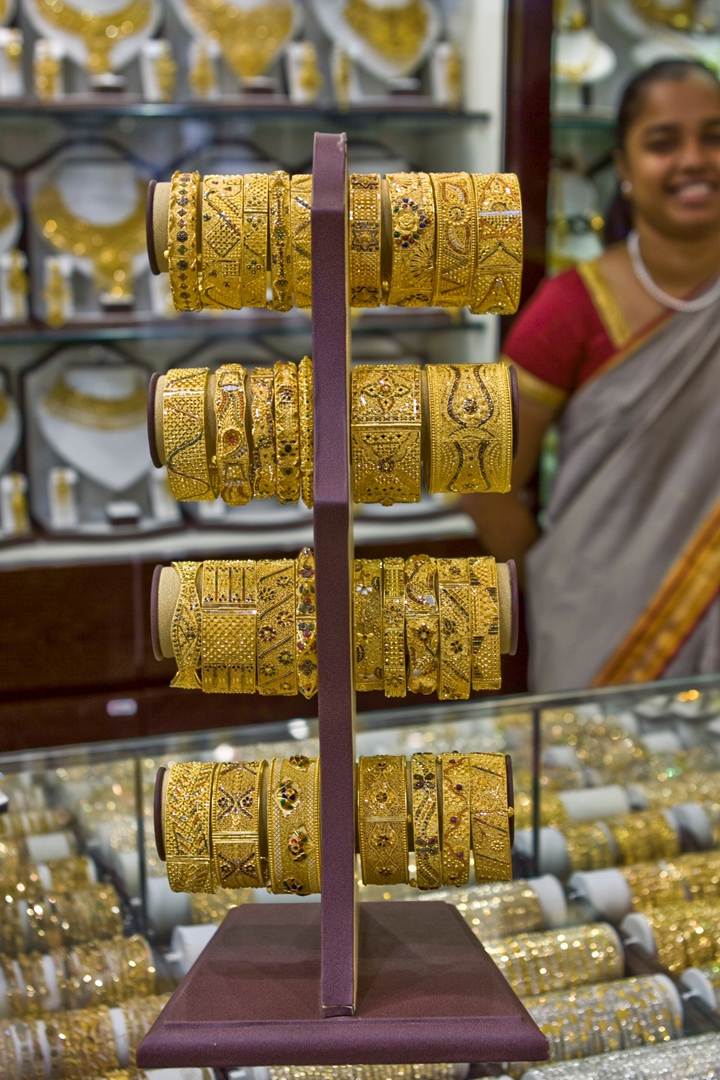
There are several malls in Abu Dhabi, the newest one, the Khalidiyah, opened just days ago. They cater to the middle classes (lower and upper) and the wealthy, with their iStores and their upper-end jewellery stores, their perfumeries, their IKEAs. No Sears or JC Penney’s here.
Nor are there any drunken teenagers at the Abu Dhabi Mall, which I have visited now three times since arriving here in late January. One must be eighteen to buy alcohol in Abu Dhabi and a teenager that age here is not likely to be found in any of the hotel bars, the only places where alcohol is sold – these are the hangouts of adult expatriates and tourists, but more on that another time.
Rather, malls in Abu Dhabi are about family and friends.
What you’ll find at a mall here are numbers of people – and I mean large numbers, though the places never seem crowded – all dressed in national costume, which, for Emirati men means a white djelaba and a red-and-white checked headscarf kept in place with a black braided egal, and for Emirati women means a black abaya with a thin veil. (More on dress code later, too.) But malls aren’t just for Emiratis. Every expat community is represented here, from dour chador-wearing Iranian moms and their bright, round-eyed children and beautiful kohl-eyed Lebanese women – so youthful they cannot be told apart from their daughters – to thin Indian men in their twenties enjoying Baskin and Robbins ice cream and Pakistanis holding hands with their best mates.
Teenage Indian girls wear black Ts with messages appliquéd on them in silver buttons, words like Beauty or Star. They wear tight denim pants, designed in Europe or North America, or knock-offs imported here from India or China. Teenage Arabic or Muslim girls wear black T-shirts with the same appliqués and tight denim, too, so I’m told. But they cover their Western fashions in abayan modesty.
I haven’t seen any lava lamps in any of the shops in the malls here. Nor is there a video arcade. The internet café, however, has two separate components. In the front are a dozen booths with broadband connections to the outside world. Here, you can sit down with a can of Red Bull or Sprite or a cup of coffee and surf the web. In a glassed-in room nearby, each of the twenty computer terminals is taken by an adolescent boy, hardly a one of them immune to acne, some with imperfectly put together native headscarves, others with hair sticking up in unnatural ways, all of them taking part in some fantasy game where they get extra lives for capturing or eating the right item before being struck by a fast-moving object of death.
On the level just below me, three boys, in long-sleeved T-shirts or sweatshirts and jeans, all about nine or ten, are playing soccer with a blue water-bottle cap. Surprisingly, they are able to control it the way they would the regulation-size black-and-white orb. When two women walk by in full abaya, the boys skilfully move the game to their invisible chalk-line border, avoiding touching them.
Any swarms I’ve seen have been of boys 13 to 15 years old in their white or pastel djelabas and headdresses horsing around and loudly laughing into cellphones, or of families, crisply starched, thinly bearded father, thin mother in an exquisite abaya – we call it burqa bling here – an in-law perhaps, and children in tow, the six-year-old son, the four-year-old daughter and a third in the stroller.
Any fishbowls are in boxes, to be taken home and filled with water, plants and fish. Any pizza is in the food court. And there’s no Barry Manilow. Just the music of this Babel of languages.
Stop, Look, Listen
It’s taught before you even get to Kindergarten: stop, look, listen.
On the corners of the major intersections in Aldenville when I was growing up (OK, there were, maybe, three major intersections in Aldenville when I was growing up and I think there are STILL only three major intersections in Aldenville), the street-crossing warning was stencilled on the sidewalk in white paint.
But just in case some of the schoolchildren had not yet learned to read or, just as likely, the paint had faded, we had a crossing guard. For the life of me I can’t remember her name, but I can remember her curly auburn hair, oval face and the crease of her smile, the blue windbreaker jacket she wore under her orange-and-white bib. She was probably in her fifties and had a gravely laugh. Once – I was in Grade 4 or Grade 5 – I got to the corner at the same time as Chuck P’s older sister (her name was Gina; she had long, soft brown hair, rim glasses, what I would later identify as a sizeable rack but at that age – and the fact that she was my friend Chuck’s sister – I wasn’t paying attention to). The crossing guard played a game with us every morning. One of us won by guessing the closest to the actual time on the crossing guard’s watch. With one declared winner, we would all cross the street together.
So, in Aldenville, Massachusetts, crossing the street is like playing a game. Stop, look, listen, guess the time, cross the street.
In England, for a North American, that’s not so easy. You have to learn to look right first. You learn quickly, or you get hurt.
There’s an old joke: What’s the difference between an optimist and a pessimist?
An optimist looks one way before crossing a street.
As I have said to my wife, Denise, many times: What I have is not pessimism. It is realism.
Many countries that were once part of the United Kingdom drive on the other side of the road, including India. The United Arab Emirates were not colonized the way India was though they were known for a time as the Trucial States and were rather closely tied to Britain. When they drew up the roads, the Emirates veered left.
So you’d think…
But no. Everyone here is a pessimist. Everyone here looks left, left, right, right, left, left, right and then jets across the street. Every morning and every evening at rush hour, it is the same thing: left, left, right, right, left, left, right and zoom. Skinny little Indian men in their crisply starched shirts, Afghans in their dishdashas, Pakistani labourers on their beaten down bicycles, women of ethnic origins unknown because of the full black veil and abaya – left left right.
Abu Dhabi – and it’s worse in Dubai, where there’s more traffic – is driven by a car culture. It is apparent in the number of vehicles per capita, in the size of the vehicles, in the number of Mercedes, Ferraris and Lamborghinis. It is obvious in the number of pedestrian and vehicular deaths per year: In Abu Dhabi alone? Nine hundred last year. That’s three a day.
The major streets, avenues and roads are all multi-lane boulevards, aka highways. There are crosswalks at intersections and at various points along a long street, but these are ignored. At each intersection, there is a right turn lane, like a right-turn highway exit ramp. Drivers yield neither to pedestrians nor the traffic they are about the join.
At most intersections, drivers are allowed to U-turn. So if the pedestrian has successfully made it across the street to the median, he cannot assume he is clear to cross the rest of the way: The cars he just walked by might turn into the lane he’s trying to cross.
Yellow lights are short and meant to be obeyed.
The safest way to cross is to wait for the walk signal, the Green Walking Man, the Giacometti of traffic signals. When he starts flashing, run.
Since I have yet to join a health club – the waiting lists are long – and I have no access to an exercise machine of any kind, I have taken to walking to work. It’s a 50-minute hike along one of the busiest streets in the city, Airport Road. I cross six major streets and innumerable smaller ones plus entrances to stores, gas stations and lube centres and taxi stands. I am on constant alert, vigilant, a Boy Scout.
I have grown in confidence, but watchful that this comfort with my urban environment not grow into complacency. Over-confidence is dangerous.
When I was 16, my friends Glenn and Glenn (we differentiated by calling one Benji) and I left for Maine with our backpacks with the intention of walking back to Massachusetts along the Appalachian Trail. We took the bus and hitchhiked up to the starting point, the mile-high Mount Katahdin. The trail wound us under canopies of tall evergreens, across scaly mountain ridges, over plank bridges in black fly-infested bogs.
On July 4, we faced fording the Kennebec River. A couple of days or so before, we had happened to come across some college kids also walking the trail. They had advised us on the best way to cross the river: Do it three times.
The river, where the trail meets it, is at least two hundred yards wide. Its bottom is rocky and there are patches of white where the water descends over a rock or to meet a rock and having met it crashes and splashes before continuing on its way. White water signals the presence of a rock.
The river was shallow when we were there, but would rise dramatically when the dam upstream was opened to allow for swift transport of logs and felled trees. Our Appalachian Trial guide indicated the dam opened afternoons. We checked our watches. It was coming on noon.
As shallow as the river was, we waded through hip- and waist-high water. We each had walking sticks. If the dam opened, how high would the water get? How fast would the logs come down?
Before the first crossing, we emptied our backpacks on the pebbly shore. We then loaded our packs with all non-essential goods, keeping only our sleeping bags and boots and a few other items on shore. We put sneakers on our bare feet, hitched our packs high on our shoulders by tying the hip belt around our stomachs. In we went.
The walk over was slow. We watched where the college guys had gone and followed a similar path, if there can be such a thing in a river, which is the very definition of perpetual motion. We were careful to place our feet rather than just walk across and eventually, Benji, then I, then Glenn got across.
We emptied our packs and traversed again, conscious this time of how the change in weight affected our resistance against the water. Just as deliberately, just as carefully, we got to the starting point, where the college guys were loading their packs again.
“This is the hardest part,” one said. “You’ve done it two times so you think, ah, no problem. But this is where you’ve got to be most careful.”
Glenn, Benji, then me. We entered. We tried to follow the path we had taken before. We kept the advice in our heads: tread carefully. We were also incredibly, vitally, aware that this was our third crossing, we were tired, and each of the previous two crossings had not been easy or short. It was long past noon.
We marked a solid point with our walking sticks, trusted our senses and placed our feet one at a time, praying for solid purchase. Though we were in the water, we waddled like ducks on land. We kept one eye upstream. Did the water seem to be rising? What time was it?
We were no longer following each other. I had caught up. We walked almost three abreast. Glenn upstream and slightly ahead. Benji in the middle, an arm’s length away. And me, the least-strongest swimmer, downstream of them about four feet.
Stick, foot, foot, watch. Stick, foot, foot, watch. Stick, foot, foot. Stick, foot. No problem. It was like crossing a street in Aldenville: a game.
And then the splash; and something was sweeping by. I reached into the water, like a bear for salmon, and grabbed for a backpack, the one thing that hadn’t gone completely under. It stopped Benji’s downstream motion. Glenn reached us within seconds and we hauled him out of the water.
We were only halfway across. The water was due to rise. We abandoned all caution and made for the opposite shore as quickly as we could, Glenn and I on opposite sides of our shaken, drenched hiking companion.
Later than night, a man from a town just off the trail came up to the lean-to we were sharing with the college guys. He had a pot of Maine-style baked beans, cooked slowly in a hole in the ground, and peach ice cream his wife had made. We had sparklers. We sang “America the Beautiful” as the sun set over the lake. The dam, he said, isn’t opened on the Fourth of July.
More from Raymond

News and events


Get in touch
I’d love to hear about opportunities to work together.
2008-2011